
On Stage 35 min
What Industry 4.0 Got Wrong: Organizational Problems Technology Can't Solve
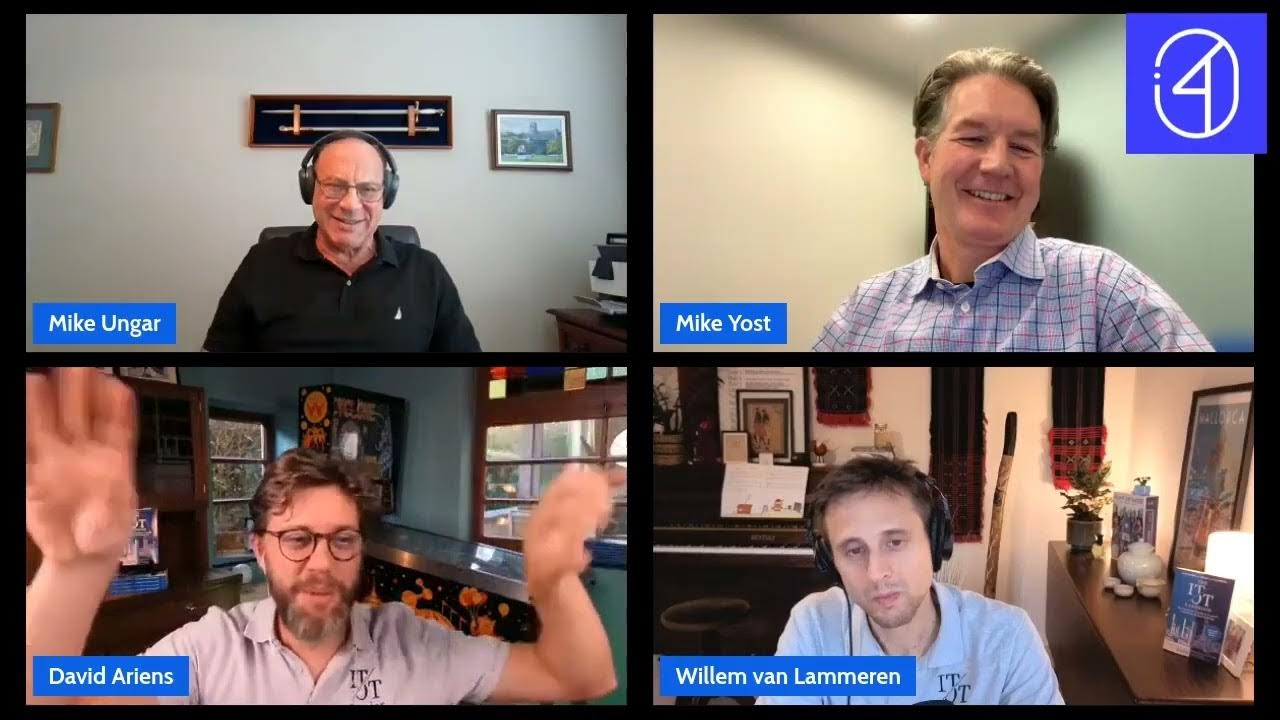
David Ariens and Willem van Lammeren join Industry 4.0 Club Chairman Mike Yost and CEO Mike Ungar to discuss the organizational problems that technology alone can't solve.
In This Episode
- David Ariens: the IT/OT technology gap behind Industry 4.0 has largely been solved, but teams keep confusing connectivity with transformation.
- Willem van Lammeren: Industry 4.0 was always more of a vision than a roadmap, so the goalposts keep moving — from dashboards, to IoT data, to now connecting AI to the shop floor.
- Willem's CIA vs. SIAC framing: IT optimizes for confidentiality-integrity-availability, OT for safety-integrity-availability-confidentiality — genuinely different priorities that cooperation has to be designed around, not erased.
- Two of David's favorite cooperation patterns from The IT/OT Handbook: "Don't Shoot Me, Shadow IT" (let capable OT engineers build their own tools) and Facilitation (dedicated OT and IT architects who just solve the easy problems together).
- Practical starting points from David and Willem: IT leaders should go stand on the production floor, and every digital project should be asked "what happens after go-live?"
- The IT/OT Handbook, three years in the making and built around seven cooperation patterns, launches October 6, 2026.
Welcome to the Fireside Chat: Introducing David and Willem
00:00 – 04:12Mike Ungar opens the Industry 4.0 Club's weekly Fireside Chat, explaining the club's mission to accelerate the global evolution to Industry 4.0 through open, interdisciplinary conversation, before introducing his co-host Mike Yost.
Mike Yost introduces David Ariens and Willem van Lammeren, co-authors of The IT/OT Handbook, and sets the topic: what Industry 4.0 got wrong, and the organizational problems technology alone can't solve. He walks through both of their backgrounds, David's years leading Industry 4.0 initiatives at BASF's Antwerp complex and Willem's role as industrial AI product manager at Syensqo, before Mike Ungar hands off with the episode's opening question: why do IT and OT still struggle to work together despite years of investment in digital transformation?
“It's great to have you guys and can't wait to talk more about what Industry 4.0 got wrong.”
Mike Ungar · 03:28
Confusing Connectivity with Transformation, and the Moving Goalposts of 4.0
04:12 – 10:58David traces the term "Industry 4.0" back to around 2010, when IT and OT genuinely had a technology gap to close. He argues that gap has since been solved, and the real problem now is that teams have confused connectivity with transformation: connecting system A to system B, building a unified namespace, or dumping data into an AI platform isn't transformation by itself.
Willem adds a second problem: 4.0 was always more of a vision than a roadmap, so the goalposts keep moving, from getting automation data into a central dashboard, to integrating IoT data, to today's question of connecting AI systems to the shop floor. That doesn't mean nothing happened, just that there's no real end point.
Mike Yost connects this to manufacturing's historical hesitation: early missteps porting IT technology straight into OT (memory leaks, network issues) left the industry "hunkered down," waiting for technology to be ready rather than adopting it, and now everyone is playing catch-up. David and Willem agree, noting that even cloud and VMs faced years of resistance that AI has largely erased, since manufacturers now want to see what's possible rather than staying closed off.
“Connectivity is not equal to transformation in Industry 4.0. So that's problem number one.”
David Ariens · 04:12
CIA vs. SIAC: Why IT and OT Are Inherently Different
10:58 – 18:02Mike Ungar asks what genuinely needs to change organizationally, beyond just calling it "convergence," given how differently IT and OT have historically approached their work.
Willem answers with an acronym comparison: IT prioritizes CIA, confidentiality, integrity, availability, while production runs on SIAC, safety first (people, not data), then asset integrity, asset availability, and confidentiality last. Those priorities won't fully align, and pretending IT and OT can think identically isn't realistic, but organizations can still design the system around them: how decisions get made, how people work together, and how incentives align at levels below those top priorities.
Mike Ungar shares how his own OT team changed the conversation with IT by asking not "can we do it," but "what does it take to do it," shifting from asking permission to driving solution development. David agrees, describing how translating OT's "exotic" requests (a legacy protocol, an always-logged-on HMI) into terms IT can act on matters, and lays out three domains organizations need to work on: connective tissue between IT and OT, a common intermediate architecture, and the skills to build both.
“Within IT, you have CIA: confidentiality, integrity, availability. If you go to production, you get another acronym, SIAC, where the first one is safety.”
Willem van Lammeren · 12:21
The Genesis of the Seven Cooperation Patterns
18:02 – 22:00Mike Yost turns the conversation to The IT/OT Handbook's seven patterns of collaboration, asking what they reveal about where an organization stands today and how leaders can chart their next level of maturity.
David traces the patterns back three years, to conversations about making collaboration visible, since cooperation isn't a single on-or-off switch but a spectrum of levels. Borrowing ideas from IT's decades of thinking about DevOps and team structures, he and Willem tested what could be ported into the IT/OT world and what had to be dropped, publishing the results on their blog before refining them through years of workshops and feedback from companies trying them out, into the seven cooperation patterns.
Willem explains why they called the book a handbook rather than a playbook: the seven patterns aren't a perfect recipe, since every company's size and politics differ, but a menu of solid, tunable starting points ranging from silos (which can be entirely appropriate when used correctly) to fully cross-functional, long-lived product teams.
“I think handbook is the right title for the book, because these are patterns, not the perfect recipe. Every company is different.”
Willem van Lammeren · 20:51
Two Favorite Patterns: Shadow IT and Facilitation
22:00 – 28:09David picks out two of his favorite patterns. The first, tongue-in-cheek named "Don't Shoot Me, Shadow IT," recognizes that OT engineers are highly capable of running their own servers and applications, since that's literally their job, and that shadow IT gets fast solutions and fast learning, with the trade-off surfacing once you cross the IT/OT line into network or cloud connectivity.
That's exactly where his second pattern, Facilitation, comes in: an architect sitting on the OT side and one on the IT side, each staying in their own organization but focused purely on solving the easy-to-solve problems between the two. David describes an energy company that used facilitation as a deliberate stepping stone, building a common list of problems over a couple of years before moving toward more integrated teams.
Willem adds that the patterns work well as a communication tool precisely because they're easy to sketch on a whiteboard, and David mentions printing the seven pattern diagrams onto a card people can use to map out "who's doing this, who's doing that" with their counterparts. Mike Ungar relays a viewer question from Sudhakar about a project delivering no benefits, which David and Willem offer to follow up on via LinkedIn, and Mike Yost notes that the infrastructure needed to get value from new technology today is far lighter than it used to be.
“One of my favorite cooperation patterns is don't shoot me, shadow IT. OT engineers are very capable of running servers and applications, because that's literally our job.”
David Ariens · 22:05
Practical Tips: Go to Production, Count the PPEs, Ask What Happens After Go-Live
28:09 – 32:34With about thirty minutes gone, Mike Ungar asks for two or three concrete things a manufacturing leader could start doing tomorrow if their biggest digital transformation challenge is organizational rather than technical.
Willem's tip: if you're from IT, especially as a leader, go to production. IT tends to sit at headquarters, and you can't design solutions for users you don't know, so go listen to their actual problems, starting with the bad Wi-Fi complaints. David's tip: count how many people in a service or IT organization actually own PPE, since the answer reveals how many of them have ever set foot on a shop floor, and send them there if not. He adds a second, unrelated tip: manufacturing is good at running projects, but digital projects rarely have a defined end state, so ask a simple question at the next steering meeting, what happens after go-live, who owns it, and where does the budget and the people go.
Willem closes the point from the other direction: operations should also make time to understand the tech world, since deploying technology at scale, especially AI, is fundamentally different from deploying manufacturing at scale. Manufacturing problems are usually well-defined; AI projects usually aren't, and that calls for a different mindset around funding and organizing the work.
“If you're from IT, go to production. You cannot design solutions if you do not know your users.”
Willem van Lammeren · 28:53
The IT/OT Handbook: Out October 6th
32:34 – 35:15Mike Ungar asks David and Willem to talk about the book everyone's been referencing throughout the conversation. David explains the simple title, The IT/OT Handbook, chosen by their publisher over a more complex one they'd originally considered, and describes it as the book they wish they'd had while doing these kinds of projects, available everywhere from Amazon to other online bookshops.
The official release date is October 6th, just weeks away after three years of work. Mike Ungar thanks David and Willem for sharing their perspective on IT/OT as an organizational challenge rather than a purely technical one, and closes with the Industry 4.0 Club's standing call to action: read an article, attend a workshop, build a smart manufacturing roadmap, and reach out if you'd like to be a guest on a future fireside chat.
“It's titled The IT/OT Handbook. So very easy to remember. It's basically the book we wish we had when we were doing these types of projects.”
David Ariens · 32:34
Full episode transcript raw feed ▸
Mike Ungar: Welcome to the Industry 4.0 Club's Fireside Chat. The club's purpose is to engage the power of diverse worldwide talent to accelerate the global evolution to Industry 4.0. We accomplish this by hosting and supporting respectful, thoughtful, and interdisciplinary open conversations and creating quality content on wide-ranging Industry 4.0 topics to expand the reach of our community. My name is Mike Ungar, and I'm the CEO of the club. I have over forty years of leadership and management experience, most of that with Michelin. I'm joined today by my co-host, Mike Yost. Mike, would you mind introducing yourself, please? Mike Yost: Not at all. Thank you, Mike. Welcome everybody. As Mike said, my name is Mike Yost. I am the volunteer chairman of the Industry 4.0 Club. and Mike's co-host here on our fireside chats. I've been in industry a little over 35 years myself. a good bit of time on the industrial solution provider side in the last 15 plus years on the industrial nonprofit side. so I really enjoy meeting folks and getting their perspectives as Mike. talked about on wide ranging topics around industry 4.0. So we're really excited today that we have David Ariens and Willem van Lammeren, who are co-authors of the book, The IT/OT Handbook, The Practitioner's Guide to IT and OT Cooperation in Manufacturing. today's topic for our conversation will be what Industry 4.0 got wrong. organizational problems that technology can't solve. so let me introduce our guests here just quickly and then we'll jump into the conversations. David is an industry 4.0 an IT OT thought leader, has deep experience in industrial digitalization, data analytics, and cybersecurity. during his career at BASF, he led Industry 4.0 initiatives across Europe and ultimately oversaw industrial digitization teams at the company's Antwerp complex. today he's a co-founder of the IT/OT Insider and the IT/OT Academy, helping manufacturers bridge the gap between IT and OT. Welcome, David. David: Thanks for having me again. Mike Yost: Yes. and along with David, we have Willem, who is an IT/OT and digital transformation leader with nearly two decades of experience spanning manufacturing operations, operational technology, IT infrastructure, and enterprise systems. today he serves as the industrial AI product manager at Syensqo where he guides the development of the company's operational data lake while also maintaining a strong connection to the production floor. like David, he's a co-founder of the IT/OT Insider and the IT/OT Academy, helping manufacturers bridge the IT/OT divide and build the organizational capabilities needed for successful digital transformation. So we're really looking forward to these conversations here today with our guests. if you are live with us on LinkedIn, please go ahead if you have any questions or comments, go ahead and put them into the comments section and we will do our best to integrate them into. the conversation. So welcome, gentlemen. Willem: Thanks for inviting us. Mike Ungar: It's great to have you guys and can't wait to talk more about what industry four point got wrong. So that'll be really interesting. I know let's jump let's just write into that if we can. So you you know we talk about industry four point it's been framed as a technology transformation, but I know you guys really talk about and argue that many of its biggest failures are organizational. So I think that's an interesting question. So really when you get down to it, what did industry 4.0 get wrong? And why do IT and OT still struggle to work together, despite, you know, this is not a new topic, years of investment in digital transformation. I'll leave that. Who would like to start us off with that? David or Willem? David: I'll I'll I'll kick it off. Well years almost decades. I think the the the term industry for that zero has been coined around twenty ten ish. Twenty eleven. There, there you have it. So it it's it I think well it's fair to say that at that time we clearly had a technology problem to solve. if you if you look back to the state of of of of IT technology back then in OT, there was clearly there was clearly a gap to solve. I think today the technology problem has been solved. Like it it took us it took us some years, but we have we have plenty of technology. And I think the first statement I wanna make here is that we kind of at least in the last years, we kind of confused connectivity with transformation. So it's it's a bit of a it's a bit of a bold statement, but like and Willem, you just you just begin wherever you want, but I've been in so many conversations where the problem is still very technical. We need to connect system A to system B, we need to build a unified namespace, whatever that may mean. we need to build such and such, we need to have a cloud system, we need to dump data in our AI platform, blah, blah, blah. but that's where we say like, yeah, but Connectivity is not equal to to transformation in industry four dot zero. So that's I think problem number one. Willem: If I if I can go to number two is we can dig deeper into each one of those as long as you want. but let's take the the second one is I'd say 4.0 was more of a of a vision. Like where do we want to be in in the future? it didn't come with a manual, it didn't come with a roadmap on like these are the seven steps you need to do to get to that vision, to get to that end goal. And If you're honest, the the goalpost just keeps moving because in the beginning it was like, wow, we can get data from our automation systems into a central server in IT and we can make a dashboard. Then it became we need to integrate IoT data. Now it's about how do I connect my AI systems to the shop war? So to say that nothing really happened is wrong. David: Yeah, absolutely. Willem: And there's also no real end point to this to this four point zero story, so to speak. So it gives you a sense that you're never getting there, while in reality you're just continuously evolving. David: Pla playing a game of catch up, maybe. Mike Yost: Yeah, I've I I've said that for a number of years. that I can remember when we were selling actually I can remember when we went from DOS computers to Windows computers in in production in production environments, and that was a big deal well before cloud and AI and the stuff we're talking about today's. But today, I think there was a hesitation by industry because there were a lot of missteps. There were a lot of times where people applied technology, maybe coming from the IT world, put it into an OT environment and it didn't it didn't hold up. we had memory leaks and we had network communications issues, right? We had all sorts of challenges like that. So it's it seemed to me at the time that as an industry manufacturer sort of hunkered down and said, Well, we're different. And so that technology might fit somewhere else, but it doesn't fit with us. And so it ingrained a mindset. of us that really we were waiting for the technology to be ready for us. And then to your point, David, it got ready and it got to the point where now we're trying to play catch up. Right. Does that does that resonate with you guys? David: absolutely. I just a couple of days ago I I was in a conversation with a manufacturer and so the good thing about working in well the good thing the the the the easy thing about working in OT yeah from a leader perspective w when we both had a leadership role at BASF for example was we always joked that the only thing we needed to do was look at the IT world, then Have those ideas, you know, write them down, wait a couple of years, and then and then with a delay of a couple of years, the the best ones would would triple down into the OT world and and we would have these we are seen as like this these futuristic guys who who know what is happening, but we were just looking at what happened in the IT world. That so there was always this delay, and whether it's five years or ten years, like if you just look at the technologies and you know VMs and cloud and and Containers and you know there's always this delay. But now people expect us to play this really quick game of catch up because all of a sudden everybody would would wants to start using these latest AI models, agentic AI, etc., almost at the speed they are made available to the market. And that is something, in my opinion, which is new for us. Willem: Yeah. It would have been, let's say, the normal feedback. For example, if you would say cloud solutions should be part of our architecture. I don't know about you, Mike, one of the mics, but people were allergic, like, no, I mean, I'm not gonna depend on systems that are sitting somewhere else. What if the network breakdown? I mean, it took years for them to get used to those ideas. and even even virtual machines. I remember vendors saying. We don't support virtual machines. Talking David: We go like that. Willem: I'm talking 2020, So wasn't new technology. Now with AI, you see that that hesitation is gone. They want to to try out what's possible with AI. I'm not talking about closed loop, but they want to see their systems connected with AI and see what's possible. So that hesitation that we saw before is gone. And now we really need to speed up. David: Yeah. Mike Ungar: Two one. Mike Yost: I'm sorry, Mike. I Mike Ungar: go ahead up. Mike Yost: was I was just gonna add an anecdote anecdote that I I used to lead a a nonprofit called Mesa International and I always tell everybody that at at Mesa we never had a conversation about the cloud because it went overnight from being a technology that manufacturers will never use to a technology that every manufacturer was using. It was it was crazy to me to to your point of how quickly quickly that happened. So I'm sorry, Mike, you guys have a question there? Mike Ungar: No, I was just gonna to kind of talk a little bit more about this, you know, taking a little bit to the next topic for a second. So we talked about IT and OT. So, you know, I know in my day, the IT guys focused on making sure that we had good cybersecurity and you know that we always had the the network running and they were always up and running and good uptime and you know things could talk to one another. The OT guys were looking at, you know, how do we improve productivity? You know, what tools do we have? So they really were t looking at almost different problems, right? Nope. At the same time. And so and even different languages to some degree, because the IT guys were spending their time with servers and the OT guys were spending their time on the machines, right? So Talk about the differences between these two worlds. And even today I know some of these differences exist. What needs to change organizationally? Because because you still have these missions that exist, they're real missions, right? What needs to change to get this genuine collaboration we're trying to do to really bring it together rather than just calling it a convergence? Willem: Ooh. Although it worked. David: I loaded but willem d do you wanna take this? Willem: So I mean there's there's tons of ways you could explain that IT and OT are different. I mean I guess you both could inv invent ten of them. one that we're taking recently, one take is the acronyms that they use when it comes to their priorities. Within IT you have CIA, where it's about confidentiality, integrity, availability. I mean you don't want your data to leak. You want your data to be correct, not stampered with, and if all that's Accomplished, you know, it's nice if it's available. If you go to production, that changes completely, and you get another acronym, SIAC, where the first one is safety. It's like the human, the persons, you don't want people to die. That's number one. I mean, in IT you can say go fast and fail fast and break things. In production, you know, when things break, you might break along. So safety is on top. Then comes integrity, but talk about another integrity. It's not data integrity, it's like the asset integrity. Then comes asset availability. Again, we're not talking data availability, asset availability, and at the bottom confidentiality. Now, those last three might change. I mean, if you're like a pharmaceutical company with a secret recipe, it's different than when you're making plastic cups. But those priorities are not gonna change. that means that good IT and good OT. Are inherently different. And trying to pretend that we're going to make that one single way of thinking is I mean it's not realistic. We're not gonna turn it into OT or vice versa. That doesn't mean you need to give up and say, like, screw that cooperation and keep on saying that the other side is super annoying. I think the big change that needs to come, and to be honest, that's something that IT stole from manufacturing and that we kind of forgot. is that you need to take a look at the way that you work and see it not as a something personal. It's like Mike, why can you want to cooperate better with IT? but rather see it as a system that you need to design as an organization. How do decisions get made? How do people work together and how do you make sure that those incentives are aligned. You can't align them on those top priorities, but you can align them on on lower levels, setting up the structures you need to make that happen. 'Cause I don't know about you, but if change needs to happen and you need to get people to work together, the least effective way is to have a town hall, stand there and say, Guys, from now on, we're gonna cooperate. Mike Ungar: Well we used to one way we overcame that, or at least one one thing I had heard a colleague describe is we used to ask IT if we could do something, and we used to get a yes or no answer, right? You know, and so and so the what we realized isn't that we need to ask a different question. I'm talking from the OT side, okay. Not can we do it, but what does it take to do it? What are the what are the conditions we need to meet so we can do it? So in other words, we were beginning to drive solution development, not asking for permission. And I think that that began to change the conversation a bit. Have you seen the same sort of thing in your work with the companies you work with? David: Yeah, absolutely. It it it's it's ca well, in hindsight, it's kind of obvious that if you're asking a question which is to the to your average IT counterparts a very exotic question, like we we we need to support this legacy protocol or yeah we we really need a functional user account here. and and and and IT would go like, Yeah, but that's against the policy. And then you go like, Yeah, but but These HMIs they are always logged on. You know, we we we we can't we we can't change that. We can't we we can't have an operator first log on before he's able to shut down a line, for example. Just just as a very I would say black and white example. So so you you do need to translate those those those requests. And then maybe we have we have three things or three important domains where we where we believe people need to work around. First, gonna say them and then we can dig a bit deeper. And that is first of all, we need to build build connective tissue between IT and OT. So we need to build those those connections, and that comes from both sides. So the num number one is build the connective tissue. It's a bit like what you already said, Mike, about explaining a problem, not just saying like, give me something. number twelve number two is we need to build a common architecture. and especially in the IT/OT domain, we are sitting in the middle, which means that we can't expect to have only IT components in our OT systems. Never gonna work. But vice versa, as well. We we can't we can't have only hey, we can't just port all our OT equipment into into IT systems. So we need to build this this intermediate IT/OT architecture. and then the third one is We need to build the skills to do so. and then it of course comes back to the person to to personnel and knowledge and and you know education, etc. etc. but those are those are the three important ones. So the connective tissue, the architecture and the skills, those three are needed to make this truly happen and truly scale. Mike Yost: What appreciate those points. I just want to remind everybody that we're talking with David Ariens and Willem van Lemmeren about what industry four point got wrong and you know organizational problems the technology can't solve. they are the co-founders of the IT OT Insider and the IT OT Academy. a lot of experience bringing these two worlds together. guys, I I I wanna ask you about the IT OT handbook. that that you put together. You identified seven patterns of collaboration between IT and OT. What can you tell us about these patterns or what can they tell leaders about where their organization is today? And then how how can they determine what the next level of maturity maturity should look like for them? David: So I'm I'm gonna do the I'm I'm gonna start Willem and you you just you you just naturally pick in. Like I I I remember three years ago when we were first discussing like we we were having these these conversations about about cooperation and we were looking for for ways to make collaboration visible because it's not there's not one way to work together. collaboration is also not an on or off switch yet. It's not something like we are either working together or not. There are also levels of collaboration. So we were looking for ways to make that visible. And Willem already hinted to that. In the IT world, thinking about organizations, and I'm gonna use the word DevOps here, is something which has been introduced in IT already man many decades ago. And there are other concepts on thinking about teams, etc. Which are becoming really commonplace in the IT world. And we took a step back. We we looked at all those concepts. We did years of work around them. And then we asked ourselves the question can we actually port those concepts into our world and keep the things which are really good, but drop the things which are non relevant for us. And and that body of work became what we then called or named our cooperation patterns. And we first published them three years ago on our blog. And in the meantime, so in those three years, we did a lot of additional research, we had a lot of workshops, and we really tried them out. We had we got feedback from so many different companies who were actually also trying them out inside their company. And that then resulted, Mike, in in our I would say our final of the things which you can find in the book are seven cooperation patterns. So that that's a bit the introduction or the the the the backstory to where we are. And now we basically have this this. Can I say toolbox, Willem? Willem: I I I think handbook is the right title for the book because indeed we're giving you should see them as as as patterns. Like it's not the perfect recipe because every company is different and you have big companies, small companies, your political landscape is different. But these are a couple of recipes you can try out, you can tune them to your own environment, but they're fundamentally quite solid and they give you a menu of silos which are actually good if they're used correctly all the way to super cross functional long lived product teams working on business problems and not on technology and everything between and everything in between. So in the book it really took the time because that the advantage of writing more than a blog is like you're forced and you have the time to to go into more detail. So it says like when do you want to use it? When do you not want to use it? How do you get out of it? Those kind of things is is what we really worked on. David: if we have time, I I want to take one example. Two Mike Ungar: Please, please. David: of my favorite cooperation patterns are do not shoot me, shadow IT. and the other one is called facilitation. And the reason I'm saying don't shoot me is because the the the the the name you you're you know your You guys are doing shadow IT. You know you they they have their servers under their desk and they're running applications and IT goes like the thing is, OT can OT engineers are very, very, very capable of of of running servers and network and applications because that's what we do. It's like it's like literally our job. It's different maybe to other domains, like people in HR or finance, which might not have that. Experience, but we in OT we do. so having OT engineers giving OT engineers the the go of you know what, if you really need that application, or you you just do it, that's what we call shadow IT. And there are pitfalls, but there are a lot of good things. And the good thing is that you have fast solutions and you learn. you learn fast, you learn what it takes to have this maybe more IT-ish application up and running, however. Shadow IT has its limitations, and that that the most important limitation is what happens when you cross that IT OT line, like when you need network connectivity or cloud connectivity, or when you have that vendor coming in. And that's where our second pattern, which is called facilitation, comes into play. And it's a very simple one. And it's basically we have an an architect sitting on the OT side, we have an architect sitting on the IT side. They stay in their organizations, but their job Now becomes to solve the easy to solve problems. Like that's all they do. The thing they do is they solve problems. and it's so simple to say, but if you see those patterns and you go, like, yeah, obviously, like this is the way we we we can actually work. And I I worked with an an energy company who actually did that. So they were in silos first, and then they said, like, okay, we're gonna move into facilitation because. the the the the they were too far apart so they they designated OT and IT architects to work together. They did that for a while, couple of years. That's that's that's built a common understanding, a common list of problems, common list of challenges. And now they are stepping one they're going one step further and they're actually going into more integrated teams that other other other corporation models but they really used it as a stepping stone for better collaboration. Mike Ungar: That's interesting. those patterns are great. I you know, I c I can't really you make me want to pick up the book and learn the other ones as well. So to really better understand the the element. I think it's a and really I think for companies it it's it seems like you know, you want to look at it so you can see yourself in there. Yeah. You know, and you know, maybe a little bit of this and a little bit of that as one way to think of it, perhaps. Willem: I I think the way you should the the way you can really use this, and this is the way that David and I we really also tested those patterns, is as also as a communication tool. I mean graphically they're super easy to draw on a whiteboard, on a piece of paper, on on whatever tool you're using. and it makes it very concrete. So s with your counterpart you can start to discuss, like we're here, you're there. Who's gonna do this? Who's gonna do that? We're doing this, we're doing that. We used to to design teams, actually. David: I printed the seven the seven Venn diagrams just on this on this on this small card, which you know I I can hand out that can use because those are the seven patterns. Now obviously you need to have some backgrounds, but th those are the seven ones and and then we start drawing on whiteboards or ver these really big b big post-it notes and it j it it just makes a really fun exercise. Mike Ungar: Before we get too far, I wanted to, we have a comment and I want I don't know that we are able to answer it because I don't know if there's enough information, but I wanted to share something with you really quick. So Sudhakar shared something that he mentioned that they've implemented a project and there are no benefits, and he adds to that. He adds to it. He he understood that benefits are possible with complete new infrastructure. So I think Sudhakar, if I could encourage you, I don't know that we can address it with what you've given us. But I'm sure if you reach out to David or Willem on LinkedIn and and connect with them, they'd be happy to talk with you about your particular challenge. Is that okay, guys? We willing to do that. Sure. David: Of course, of course. Mike Ungar: Super. I I just want to make sure we thank you for putting those comments in your in Sudakar in in LinkedIn, but I don't know that we have enough information. But please reach out to David and Willem on LinkedIn and connect with them so that they can. maybe give you get more information from you and give you some more insights to to dig into those challenges. Mike Yost: Yeah, and and and my get my guess so just to chime in on that is along the lines of some of the conversation already, the evolution of the technologies available today. I mean, the infrastructure required nowadays to to get value out of technology deployments is a lot lighter than it used to be. and and so I I'd be quite surprised if there was a a ton of infrastructure that needed to be put in place to to realize at least some value. But we can let these guys dig in more with you. So David: Every every problem is is unique, but I yeah to your po but but but indeed o on average, to your point there is enough technology available to at least make a meaningful start. W whether it's scalable, that's another story, but at least make a meaningful start. Mike Ungar: You know, we've we've been talking for the last almost the last 30 minutes now. I kind of wanted to hit jump to a question about, you know, leaders have things to do. Leaders need to make sure that they're moving their businesses forward, right? So if a manufacturing leader recognizes that their biggest digital transformation challenge isn't technology, but really how the IT/OT operations and leadership work together, could you just finally kind of give us two or three tips or things they could do. let's say tomorrow even, to begin making a change to to how they've worked together. David: is there is a very easy one. Everybody can do tomorrow. Willem, I'm I'm giving you you go ahead. Willem: A leader or not, but especially leaders, if you're from IT, go to production. I mean IT, especially in big organizations, sits in headquarters. you cannot design solutions if you do not know your users. Go to them, s survive the first thirty minutes talking about bad Wi Fi and some stuff like that, and start to listen what their real problems are, because you might have a completely different view. Yeah. David: And here is here is just a small tip for your average service organization, IT organization, whatever. just count the number of people who have PPEs. You are you'll you'll be amazed how little people, how how I would say how like if you have a hundred people in your organization, how how many of those actually have PPEs? And that means if they don't have them, like have they ever been on a shop floor? Question mark. Send them there. So that's number one. The other one is is also it's completely different different topic. That is in manufacturing we are very very good at doing projects. That's how we work. Every manufacturing organization does projects the entire time. However, when we are implementing digital solutions, digital problems, we Typically don't know what the end goal is gonna be. It's it's a moving average. We already discussed that briefly in the beginning of this conversation. So that means that a simple question, another again, a very simple thing. If you are currently in a project, in the next steer code meeting, whatever you have, you ask the question what happens after GoLive? Or what happens after the project comes to a closer closure? Very simple. Who owns? Where did where did the budget come from? wha what people are still gonna remain here, etcetera, et cetera, et cetera. But simple question what happens after the project closes? Question mark. Willem: I think also linked to that. besides IT visiting sites, I would say also for on the operation side to to get to know the the tech world better because it's hard to understand what it takes and what the challenges are if you do not start to really understand what it takes to to deploy technology at scale. It's different than deploying manufacturing at scale, just like David said, the problems are undefined. And they're most of the times not solved, which is very different from engineering problems. Because if you're doing the bottlenecking, you know what you're going to do, you know what you're going to change, and you know exactly and what steps you're going to execute at the bottlenecking. I can guarantee you your next AI project is gonna be very different. Like we're gonna do something with AI, maybe in this domain, maybe in that domain, but you cannot guarantee where you're going to end. And that's a very different mindset and a different way of funding and organizing work. so take some time to get to know that world also. Mike Ungar: That's very good. Yeah, I wanted Go ahead, Mikey. Mike Yost: Nope, I just said that was great advice. Mike Ungar: Yeah. So guys, I I wanted to ask you as we wrap up here, at the top, Mike mentioned briefly that you guys have a of a book that's coming out. Can you just talk about the book for just a second? 'cause I think it it contains a lot of things you've shared today. So what's the title of the book again and and and maybe where we can find it if we want to to begin it? David: So very simple, it's it's it's titled The IT/OT handbook. So very easy to remember. we had a very complex title in our mind, but our publisher said, you know what, guys, I think the IT/OT handbook is a better one. So that's the title. It's basically it's basically the book we wish we had, when we were doing these types of projects. and it can be found all across the world, in your your favorite online bookshop, so Amazon but but so many other platforms as well. Mike Ungar: Perfect. And is it available now or is it it is not not quite yet? David: in two weeks. the official release date is October sixth. So that's just around the corner, especially for us because we're working we've been working on the thing for three years. So in our minds tomorrow. Mike Ungar: Yeah. No, but even though we're live and that's and I'm glad you said the date, because even though we're live now, I know some folks will pick up this recording in a in a little bit. So October 6th is the date to remember to get it. That's wonderful. That's excellent. Well, yeah. So I want to thank you guys, both of you, David and Willem, for for sharing your your perspectives on addressing I won't say IT/OT convergence because I would be wrong, but this idea this idea of IT/OT and an organizational challenge and and and ways on how to to really focus on the problem solving and and bringing together and driving the future of the organization. So thank you for that. David: Thank you for having us. Mike Ungar: So the club, the industry yeah, the industry 4.0 club, we'd like to encourage you to take some action to advance the deployment of industry 4.0. So read an article, read a book. You just got an example of one that you can take a look at. develop attend a workshop or develop a smart manufacturing roadmap for your your plant or your company. Or challenge your organization to do the same. We'd love to hear what you're talking about, what you're doing. Drop us a line on our LinkedIn page. or at our website at www.industry40 club.com and let us know what actions you're taking to advance the deployment of industry four point We also host conversations like these weekly. So if you'd like to be a guest on a future fireside chat, we'd love to hear from you. Drop us a note and let us know and we'll do our best to get you scheduled for a future talk. With that, again, David, thank you. Willem, thank you. Mike, thanks for taking your time out of your day and We look forward to seeing and and hearing from you in the future.